
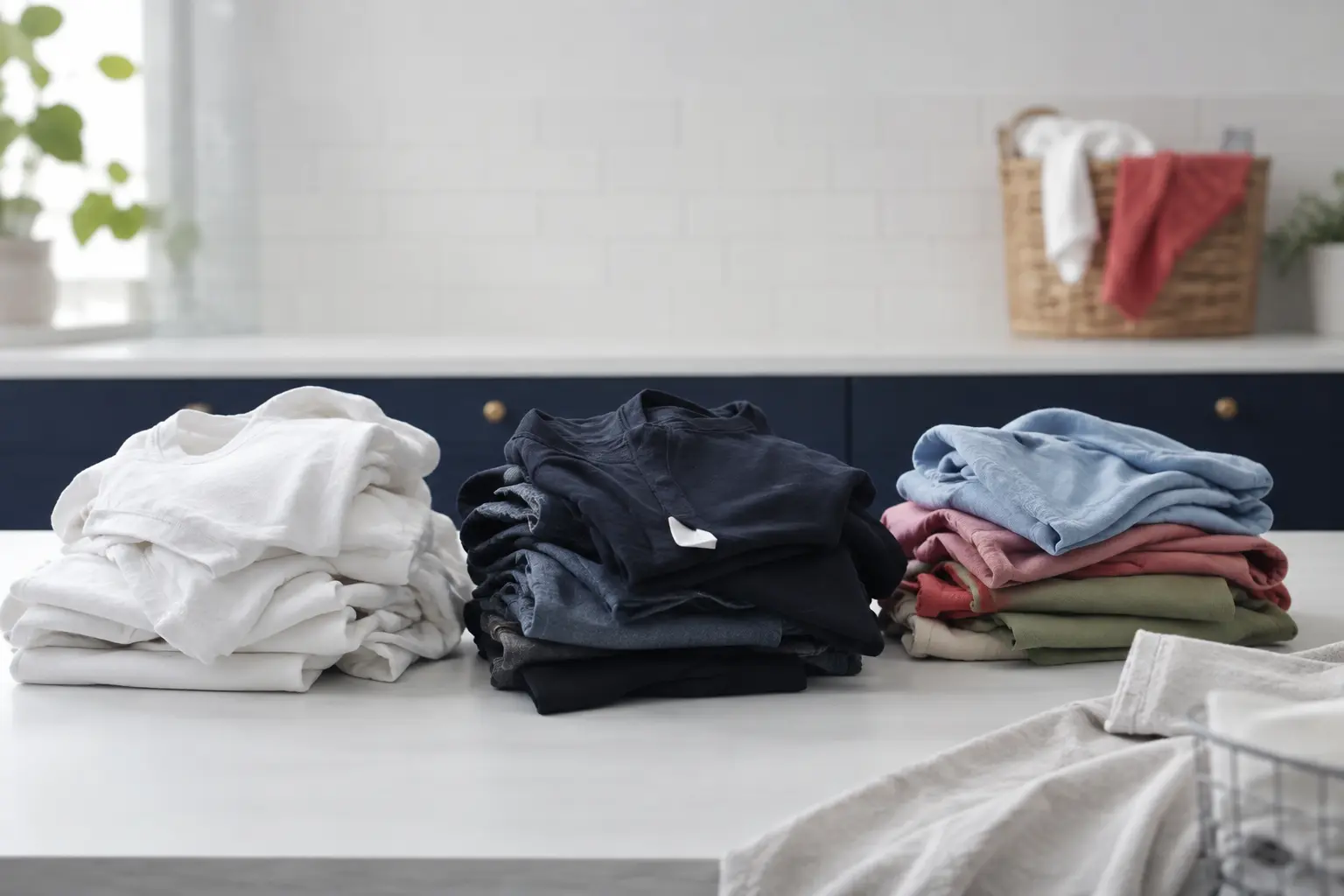
This guide explains “How to prepare clothes before washing” with practical advice for caring for clothes and using the machines correctly.
Start with the garment, not the machine
This guide explains “How to prepare clothes before washing” with practical advice for caring for clothes and using the machines correctly.
The safest way to approach How to prepare clothes before washing is to decide first what the fabric, colour and care label will tolerate. A professional washer can offer capacity and consistency, but it cannot override a manufacturer restriction or make incompatible garments suitable for the same load.
Build a load that makes sense as a whole
A good load is not simply a bag of clothes that happens to fit. Items should share compatible colour, fabric behaviour and care requirements. Heavy, absorbent pieces can also behave very differently from light garments once water and movement are added.
If one item needs a much gentler treatment, has an uncertain label or may transfer colour, separating it is usually easier than compromising the rest of the load.
The most useful decision is usually made before pressing start: preparation prevents corrections later.
An A Plus team tip
Capacity is part of garment care
Leaving room in the drum allows clothes to move, separate and receive water and washing products more evenly. For bulky items, volume may become the limiting factor before the nominal weight is reached.
If the load has to be pushed in or sits as a compressed block, choose a larger machine or divide it. More time or more product will not correct a load that cannot move properly.
Use heat only when the label allows it
Washing and drying temperatures should be chosen for the most sensitive item in the load. Extra heat is not a quality setting and can affect colour, elastic, prints or delicate fibres.
Before moving to a dryer, check which garments are allowed to tumble dry and consider separating pieces with very different thicknesses. The best washing decision can be undone by an unsuitable drying decision.
Finish with a real inspection
Do not judge the result only by the fact that the programme has ended. Check the garment that motivated the guide, inspect thick areas, seams and colour, and make sure no item has been left in the drum.
If something still needs attention, deal with that item separately rather than repeating an aggressive process on the whole load. Good care is often about knowing when a smaller correction is enough.
A practical step-by-step method
- Define the result the load needs.
- Check pockets, fastenings, stains and labels.
- Separate incompatible colours and fabrics.
- Choose a suitable machine and programme.
- Inspect the result before finishing.
Common mistakes worth avoiding
- Do not improvise after the load is already prepared.
- Never mix products or treat a garment without checking its label.
- Do not assume that more heat or more product means a better result.
How to recognise a good result
Clothes should be clean, properly rinsed and free from visible damage. Before storing them, check thick areas, make sure nothing remains in the drum and separate any item needing further care.
Questions people often ask
Which guidance takes priority?
The manufacturer care label and the rules displayed in the location always take priority over general advice.
What if I am still unsure?
Do not start the cycle. Note the machine or garment type and call the laundry for confirmation.
Do I need to bring washing products?
No. A Plus washers include the products and dose them automatically.